Whopper Neutrality →
A simple yet brilliant way of explaining Net Neutrality
I'm still trying to wrap my head around it, but so far this is the best explainer video I've seen.
Apple Slowing Down Old iPhones →
Brian X. Chen of NYT:
What Apple is acknowledging is a power management technique in which the iPhone scales back processing power to keep the device running for longer when its battery health is low. Lithium ion batteries have a limited number of charge “cycles” before they can no longer be recharged properly. Apple’s website says the battery loses about 20 percent of its original capacity after 500 charge cycles.
In other words, if your iPhone is beginning to run out of battery capacity, these slowdowns might kick in to keep it running for longer or prevent it from shutting down unexpectedly.
This isn't a ploy to get old iPhone customers to upgrade. On the contrary, this is an engineering decision made to keep your old iPhones running longer.
Engineering-wise, I think Apple made the right decision. But user experience-wise, I definitely think Apple needs to better communicate these limitations of lithium ion technology, especially when an iPhone customer's battery has degraded past a certain threshold.
Every iPhone customer should know the cheapest solution is to replace the battery through Apple for $79.
Rumor: Apple to Converge iOS, macOS Apps →
For Microsoft, shifting to universal apps was a way to shed legacy baggage and encourage support for post-PC devices. For Google, bringing Android apps to Chrome let them tap into native functionality and performance.
For Apple, it lets the massive iOS platform help pull the Mac platform forward.
If true, this would be another classic case of Apple copying an idea where that others have failed to execute.
It's a brilliant idea but the success or failure of this type of move would come down to the nitty gritty details that will affect iOS/macOS developers.
Net Neutrality, Explained by John Oliver →
Brilliant video. By far the best way to explain Net Neutrality to real people.
Windows 10's Big Productivity Feature: Sets
Mac OSX's Mission Control (formerly Expose and Spaces) was — and still is — the killer feature that convinced me to give up my 10 years of loyalty to Windows.
As a web developer who constantly has to juggle multiple windows and apps to complete one task, this is compelling.
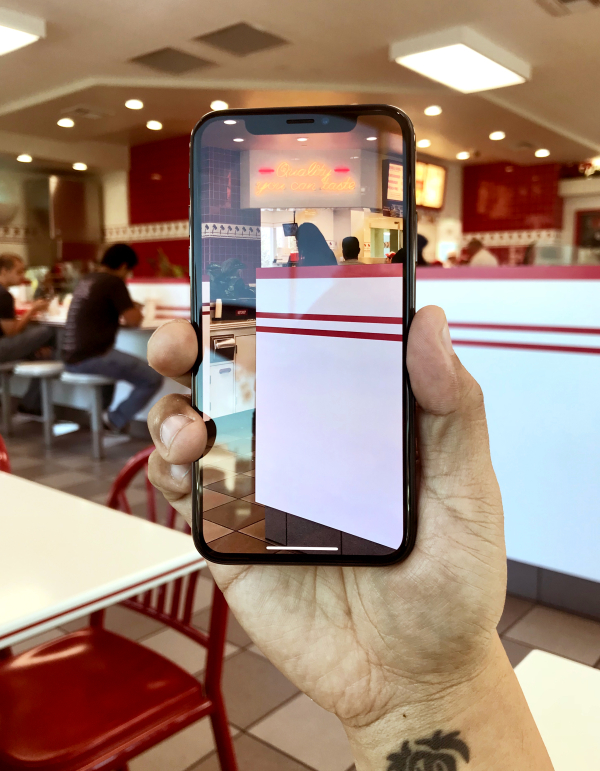
Two Weeks with iPhone X
Whenever a new technology or big redesign comes along, reactions tend to split between two types of people:
- Those who like things just the way they are.
- Those who embrace change.
Those in the first group, Apple introduced the iPhone 8. It's for those who like the familiarity and comfort of the same hardware design since 2014. It's for those who want the same iPhone, but better.
The iPhone X is for iPhone customers in the second group. Those who are happy in the Apple ecosystem but are eager for something new.
After using the iPhone X for two weeks, I'd like to share some of my experiences for those who are considering it and highlight some details you probably missed.
Technology is like Fashion →
Benedict Evans brilliantly draws parallels between technology and fashion:
There's a common idea that in some way fashion designers get together in a room and decide what the fashion will be next year. That's a pretty fundamental misunderstanding. Rather, they propose what might fit the zeitgeist. Sometimes that's incremental and sometimes it's a radical break - sometimes the pendulum needs to swing from one extreme to another. Sometimes they get it wrong, but when they get it right it captures an age. The New Look proposed that people wanted to move on from the clothes of wartime austerity, and from austerity itself, and that this was a good way to do it, and Dior was right.
I'm reminded of these kinds of shifts when thinking about Facebook and how much it can change behaviours - about how much it can decide what the new thing will be. After all, social media has now moved far past the point that it serves any kind of purely utilitarian purpose. There was a time when instant messaging or the asymmetric feed were simply better person-to-person mechanics than email (as one could argue that Slack is now). Now, though, we're shifting around at the top of Maslow's hierarchy of needs, experimenting with different ways to explore and express our personality and our needs, and so, in a sense, of the zeitgeist. Many of these trends have also expressed the same sense of a pendulum - we swung from the chaos of MySpace to the structured order of Facebook, and then swung again to the fun and exuberance and creativity of Snap (or at any rate that Snap aspires to have). But Snap of course is not the only one - sitting on top of the smartphone, which is itself a social platform, there are dozens of apps and experiences, from GIF keyboards to live streaming apps to animoji, all trying to capture a little piece of Maslow. Social is pop culture. […]
Indeed, when something becomes fashionable, it will inevitably become unfashionable - "no-one goes there anymore - it's too crowded". The zeitgeist changes both of itself and because of your success. So the very fact that any social media company has found a behaviour that people want means that at some point they'll stop wanting it. People stopped wearing the new look, they stopped wearing miniskirts, and they stopped wearing punk. There is always a pendulum.
We usually imagine that invention occurs in a flash, with a eureka moment that leads an inventor towards a startling epiphany. In truth, large leaps forward in technology rarely have a precise point of origin. At the start, forces that precede an invention merely begin to align, often imperceptibly, as a group of people or ideas converge, until over the course of months or years (or decades) they gain clarity and momentum and the help of additional ideas and actors.
—Jon Gertner